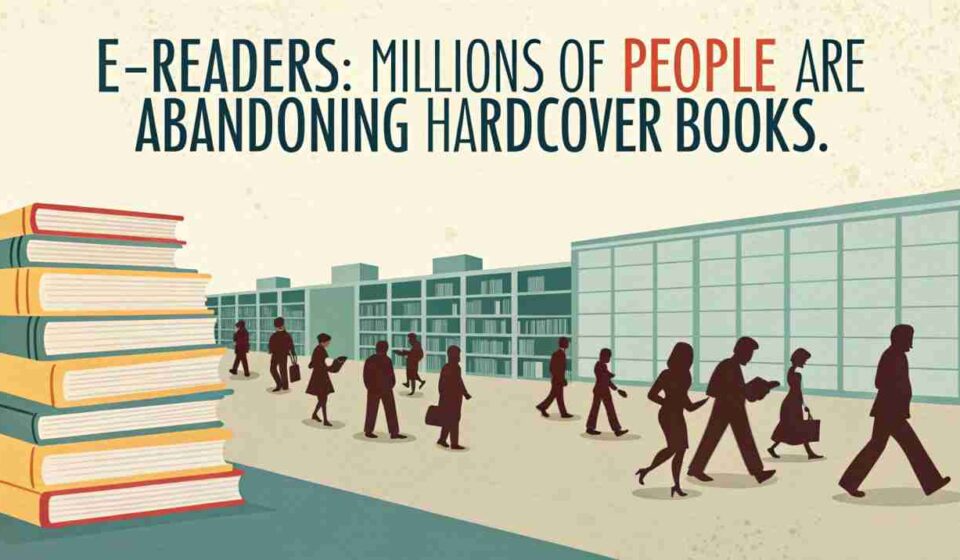

It is really something special to have a real book in hand. The scent of the pages, the good feel of holding the pages in your hands, and the physical experience of leafing through a book as you move on to the next chapter. To a large audience, these are things that are very important and cannot be replaced. However, speak to a person who reads a lot, or better to say, commutes, travels a lot, and reads several books monthly, and they will most likely tell you that an e-reader has transformed their reading life in many ways that they never anticipated. The switch has been made by millions of people. This is a candid explanation of why.
An e-reader is a special handheld device that has been designed to read digital books, magazines, and documents. Most of the e-readers, unlike tablets and phones, utilize a display technology known as e-ink. E-ink displays do not emit light as a phone or computer screen, but reflect it, just like the ink printed on paper. The outcome is that you have an easier reading of your work, particularly when engaging in prolonged reading. E-readers are totally comfortable even during hours of use to many people who are challenged with eye strain because of screens.
The Real-world Benefits That Reel People In.
One of the most obvious benefits of an e-reader is storage. It is possible to store thousands of books in a single machine – your whole reading library comes with you in less space and weight than one paperback novel. This in itself can be life-changing for frequent travelers. Gone are the days of tormenting about the two or three books to take on a two-week trip. All of the books you carry in your bag do not contribute to any extra weight.
Another aspect that e-readers win by a huge margin is battery life because they last much longer than all other screen-based products. Most e-readers will take several weeks on one charge in normal operation, unlike smartphones and tablets, which require to be charged on a daily basis. Thirty minutes a night reading, you may read a whole month before the battery alarm sounds. Such a reliability removes an additional charger to be concerned about, and another item that can fail on you when you need it the most.
Varying font sizes have rendered e-readers truly life-saving to the elderly or those who have difficulties with small printed text. You can have the text on the screen as big or small as you like, and you have the font type and weight set to whatever feels comfortable to you. The adjustable brightness allows reading in the bright sunlight or in a dim room without disturbing a sleeping partner. A red-colored light is substituted with a warm amber light mode, which does not interfere with sleep when reading at night.
Another attractive factor is cost. The cost of e-books is usually lower than that of physical books, sometimes by a large margin. And numerous public libraries are providing free e-book lending in apps compatible with popular e-readers. You are able to borrow the latest bestseller in your library without leaving your couch, without standing in line and without paying a single dollar. This alters the economics of reading much.
What E-Readers Are Not So Good at.
Honesty matters here. E-readers are great when it comes to reading plain text novels, memoirs, biographies, journalism, and essays. They do not work well with highly pictorial books, art books, technical manuals with complicated diagrams, or children’s picture books where graphics play a key role in the experience. Most e-readers have screens that are smaller than a book page, and most are shown in gray and not in color.
Navigation may also not be as intuitive as a physical book. Going back and forth to reread a favorite passage, or to check something you half-remember, is more hassle on an e-reader than simply flicking through pages with your thumb. Others also just lack the feel of it, the physical presence of a book as a thing.
Amazon has the most popular line of e-readers with the Kindle line of e-readers, available in a variety of price ranges. Kobo also offers good substitutes to readers who do not want to be trapped in the Amazon ecosystem. They both relate to extensive collections of online books.
Unless you are a heavy reader who prefers a real book because you like the feel of a book in your hands, and one that is easy on the eyes and can fit in your pocket, an e-reader is truly difficult to surpass. Take a chance for a few weeks, and you might have it reform the way you read and the amount you read.